
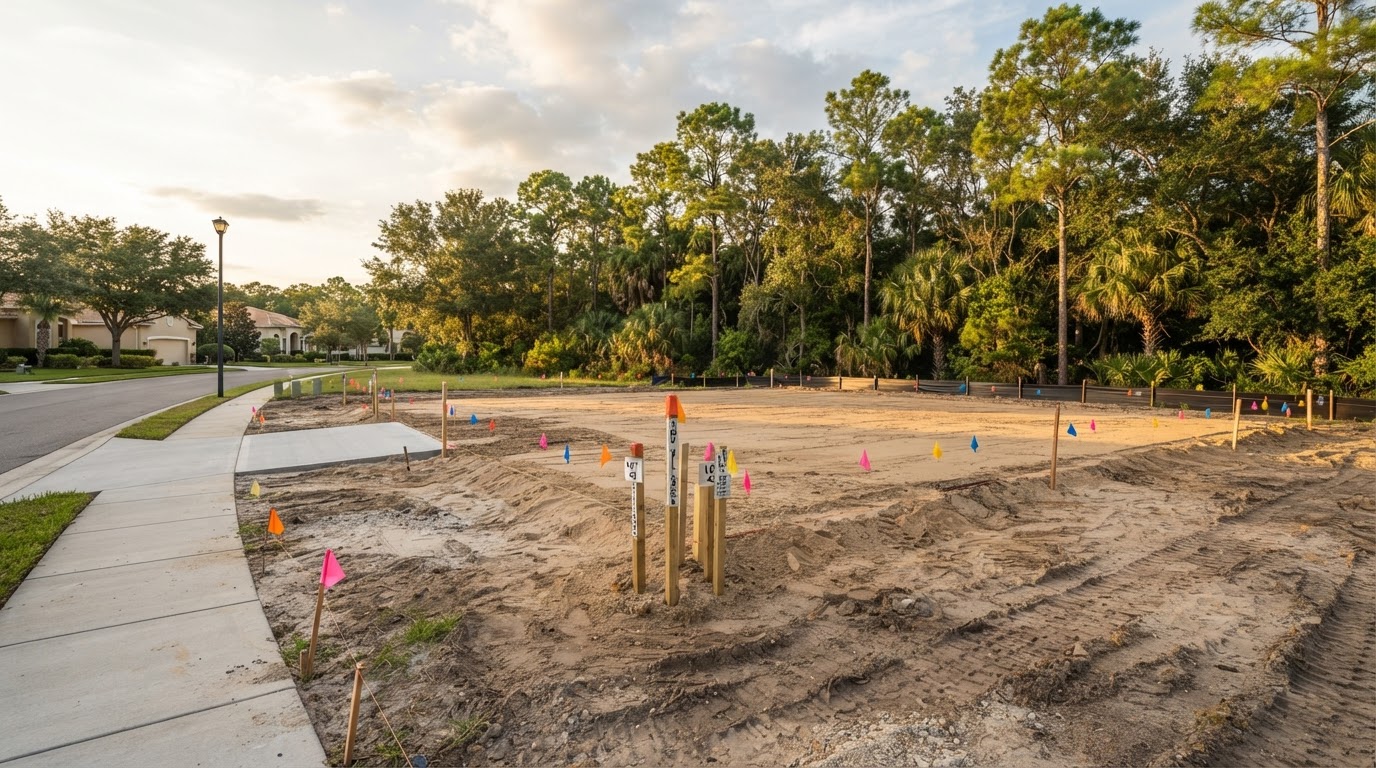
A new home in The Villages or anywhere in Sumter County does not start with the foundation — it starts with the lot. Before a builder can pour, the land has to be cleared, the stumps and roots pulled, and the pad graded and compacted to a level, well-drained base. Skip that prep or do it out of order and you inherit drainage problems, settlement cracks, and a build that stalls before it starts. Here is what proper site prep for new construction looks like on a Sumter County lot, and why the sequence matters more than most homeowners realize before they break ground.
Why Site Prep Makes or Breaks a Build in The Villages
The Villages and the surrounding Sumter County area are built on sandy, well-drained soil that is great for building — once it is prepped right. An overgrown lot, though, hides stumps, roots, and drainage low spots that have to be addressed before any concrete touches the ground.
A buildable lot is not just a clear lot. It is a lot where the vegetation is gone, the stumps and roots are out, the pad is shaped and compacted, and water has a path away from the home. That is what site prep delivers.
Step 1: Clear the Lot Down to Buildable Ground
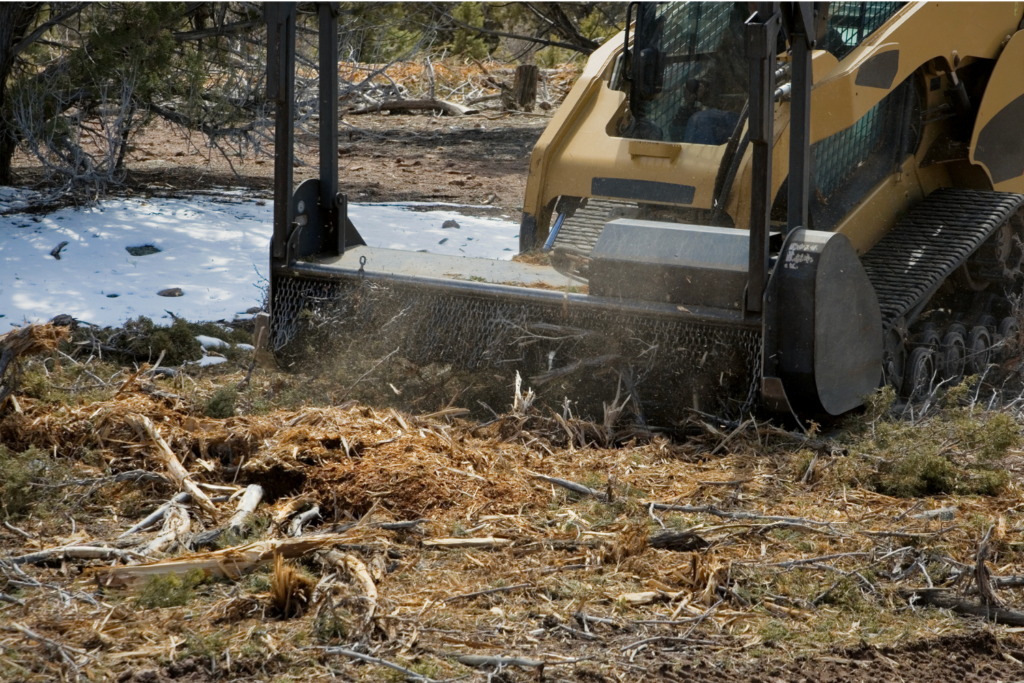
Clearing removes the brush, palmetto, and trees inside the building footprint and the driveway path. On lots choked with brush, forestry mulching grinds the vegetation in place and leaves a protective mulch layer — no debris piles, no hauling, no bare dirt exposed to the next storm.
Where mature trees or stumps sit inside the footprint, excavation handles the deeper removal. The goal is a clean footprint down to the soil your home will rest on, with the shade trees you want to keep left standing.
Step 2: Stump and Root Removal
A stump left under a building pad is a future settlement problem. As buried wood decays, the ground above it drops, and a dropping pad means a dropping foundation. Professional excavation pulls stumps and the main root mass so the pad rests on stable, compactable soil.
This is the line between a lot that looks cleared and a lot that is actually ready to build on.
Step 3: Grade and Shape the Pad
Grading levels the pad and sets the slope so water moves away from where the home will sit. In sandy Sumter County soil, a pad that holds water is a pad that softens, and a softened pad fails under a foundation or a driveway.
The grade also sets up the driveway elevation and ties the lot into the surrounding drainage so stormwater has a path off the property instead of pooling against the slab.
Step 4: Compaction for a Stable Base
Compaction densifies the shaped soil so the base holds its form under the slab, footings, and driveway. A properly compacted pad does not settle after the home is built — which is the whole point. Without compaction, even a well-graded pad can shift as the weight of the structure loads it.
Together, grading and compaction give your builder a level, stable, well-drained starting point — the definition of buildable.
Step 5: Drainage and the Final Walk-Through
Before the lot is signed off, drainage gets a final check. Where does a summer downpour go? Is the pad high enough to shed water? A proper grade directs runoff away from the footprint and the driveway toward a natural flow path.
The walk-through confirms the pad matches the survey, the slope is correct, and the site is clean and ready for your builder to start.
Why the Right Crew Hands Off a Cleaner Build
Site prep done right means your builder starts on level, compacted, well-drained ground — no surprises, no clearing change orders, no drainage fixes mid-build. When the same team clears, excavates, and grades with the build plan in mind, the handoff to construction is clean.
That is the value of a licensed, insured local crew that knows The Villages and Sumter County soil: a lot that is ready to build on the day your builder shows up.
Claim your free estimate in The Villages & Wildwood
Ready to put this to work on your property? Tell us what you need and Michael will walk your lot and give you a clear, no-obligation quote.
More Central Florida Land Articles
Get a Free On-Site Quote
Tell us about your property. We'll be out to walk the lot and give you a clear, no-obligation estimate — then you can book a free estimate call.