
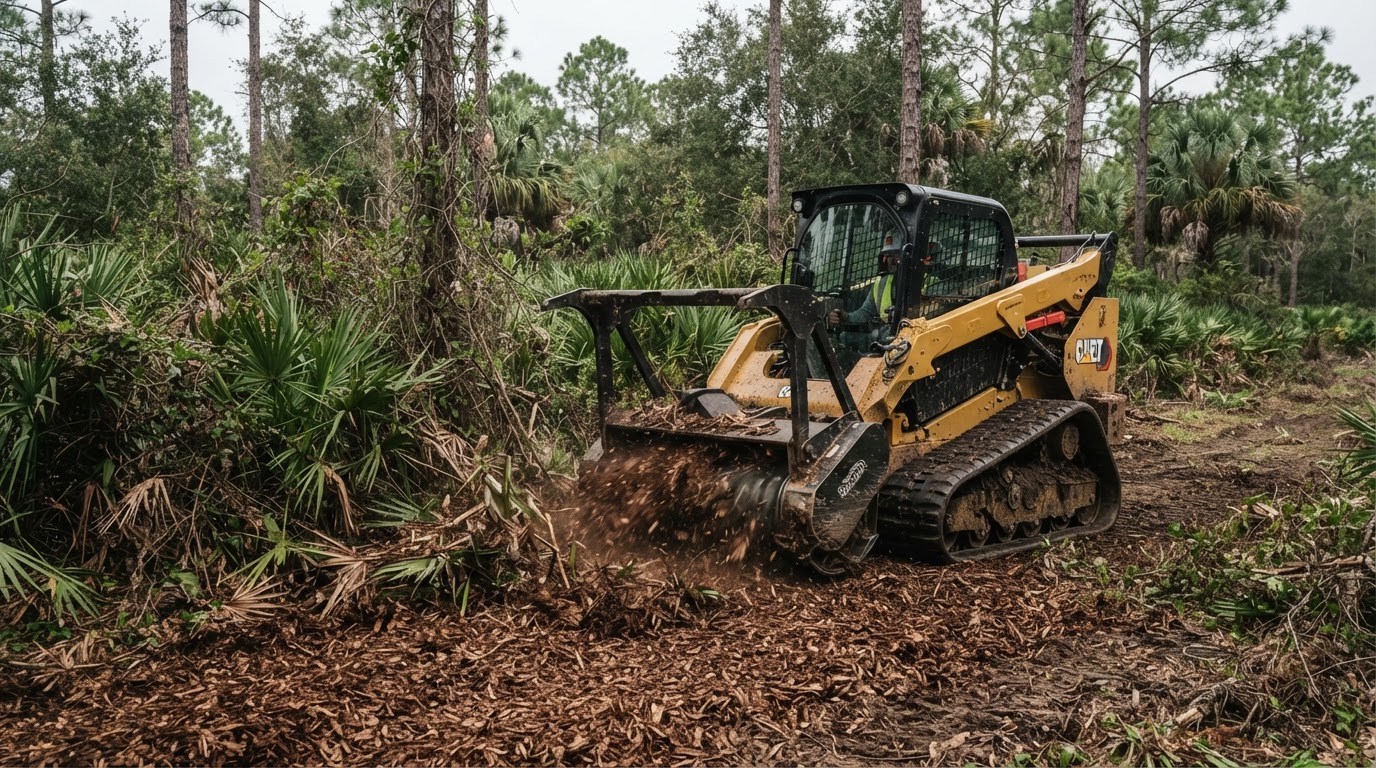
On a lot of Ocala properties, the fence line is where the overgrowth starts. Brush, vines, and saplings creep in from the edges, climb the wire, and shade out the grass on both sides. Before long a clean property boundary turns into a brush tunnel that rots posts, hides broken wire, and blocks access to half the land. Forestry mulching is the cleanest way to take that edge back — it grinds the overgrowth in place, leaves the soil and your fence intact, and opens the boundary back up in a single pass. Here is why fence-line and property-edge clearing is one of the best uses of forestry mulching on Marion County land.
Why Fence Lines Are the First Thing to Overgrow
Vegetation does not take over a property evenly. It moves in from the edges first — fence lines, tree lines, and the boundary where mowing stops and the brush starts. Those edges get less maintenance, catch wind-blown seeds, and shade out the grass you want, which lets palmetto and vines establish fast.
Once brush is growing through the fence itself, it is doing damage you cannot see. It rots wooden posts, hides broken or rusted wire, and holds moisture against the fence until the whole line needs repair.
What Forestry Mulching Does Along a Fence Line
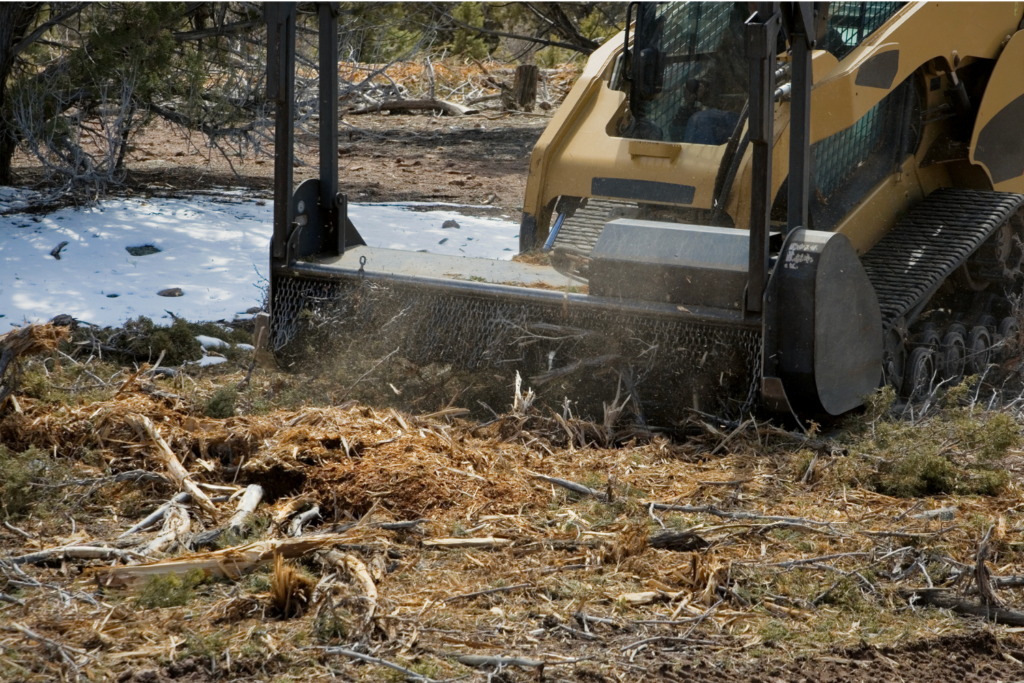
Forestry mulching is built for exactly this work. A mulcher grinds the brush, vines, and saplings growing along and through the fence into a mulch layer right on the ground — no piles to burn, no debris to haul, and no bare dirt exposed to the next rain.
Clearing the Brush Without Tearing Up the Ground
The advantage of mulching over a bush hog or a bulldozer along a fence is precision. A mulcher works right up to the line, takes the woody growth a mower cannot cut, and leaves the fence, the posts, and the soil underneath largely undisturbed.
That matters on Marion County's sandy ground. A cleared fence line that keeps its soil structure and a protective mulch layer resists erosion where a scraped-clean edge would wash out in the first heavy rain.
What the Mulch Layer Does for the Fence Line
The mulch left behind is not waste — it is working ground cover. It suppresses the regrowth of the invasive brush you just cleared, holds moisture in the sandy soil, and breaks down slowly to feed the ground as the grass comes back.
A mulched fence line stays cleaner longer than a scraped one because the mulch slows the brush from re-establishing right where you just removed it.
Property Edges, Tree Lines, and Access Roads
Fence lines are one edge; the same overgrowth takes over tree lines, ditch backs, and the access roads and trails that let you actually use your land. When those edges grow shut, a property shrinks — you lose the path to the back of the lot, the clear sight line along the road, and the usable ground near the tree line.
Mulching reopens those edges the same way it reopens a fence line: in a single pass, with the ground left usable and the debris turned into mulch instead of piles.
Pairing Fence-Line Mulching with Routine Maintenance
Once the fence line is mulched clear, keeping it is far less work. Regular bush hogging knocks down the light regrowth before it turns woody again, and a recurring mowing plan keeps the palmetto and saplings from reclaiming the edge you just took back.
The difference is night and day. A property that gets its edges mulched once and then maintained stays open, accessible, and easy to care for. A property that never reclaims its edges slowly loses ground to the brush every season.
Claim your free estimate in Ocala & Marion County
Ready to put this to work on your property? Tell us what you need and Michael will walk your lot and give you a clear, no-obligation quote.
More Central Florida Land Articles
Get a Free On-Site Quote
Tell us about your property. We'll be out to walk the lot and give you a clear, no-obligation estimate — then you can book a free estimate call.