How Forestry Mulching Reduces Wildfire Risk on Marion County Properties
Every dry season, Marion County property owners face the same quiet threat: overgrown land loaded with brush, dead vegetation, and dense underbrush that can turn a single spark into a fast-moving wildfire. Clearing that fuel is one of the smartest ways to protect your property — and forestry mulching has become the go-to method for doing it. Rather than burning or hauling debris away, forestry mulching grinds unwanted vegetation into a protective mulch layer right where it stands. Here’s how this approach to land management reduces wildfire risk across Central Florida.
Why Wildfire Risk Runs High on Overgrown Marion County Land
Central Florida’s warm, dry stretches create ideal conditions for fire, and overgrown property makes the danger worse. When land goes unmanaged, vegetation builds up year after year, raising the fuel load and the risk of wildfires that can spread quickly toward homes and structures.
How Dense Brush and Undergrowth Fuel a Wildfire
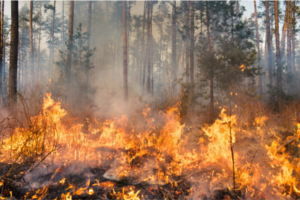
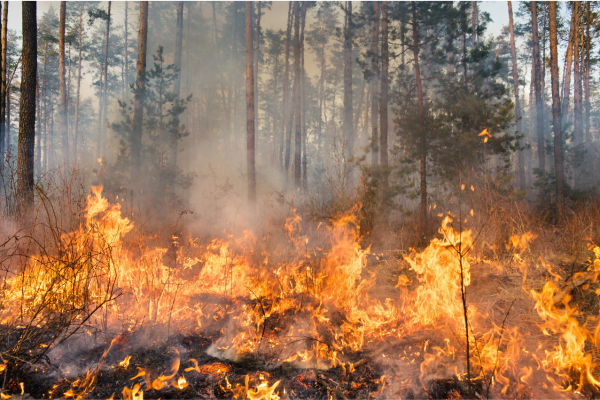
A wildfire needs fuel, and dense vegetation supplies plenty of it. Overgrown brush, tall grass, small trees, shrubs, and dead plants all act as fuel that ignites easily and burns hot. The thicker the underbrush, the more susceptible the land becomes to ignition.
Dead vegetation is especially dangerous. Dry, brittle material catches fire fast and helps flames climb from the ground into the tree canopy, accelerating fire spread. On overgrown property, that continuous layer of fuel gives a fire everything it needs to grow.
What Central Florida’s Wildfire Season Means for Local Property Owners
Central Florida’s wildfire season arrives with the dry months, when low humidity and drought-stressed plants heighten fire risk. During fire season, even a small ignition source can threaten acres of overgrown land in a hurry.
For property owners, that seasonal threat of wildfires is a reason to take proactive steps well before conditions peak. Managing dense vegetation ahead of time is one of the most effective forms of wildfire prevention available.
What Forestry Mulching Is and How It Works
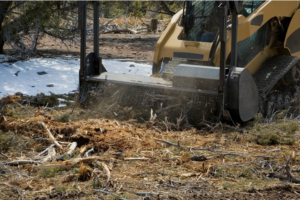
Forestry mulching is a modern land-clearing method that grinds trees, brush, and underbrush into mulch in a single pass. Unlike traditional land clearing methods that rely on burning or hauling material away, the mulching process keeps everything on-site and turns it into a useful ground cover.
How Forestry Mulchers and the Mulching Head Clear Land
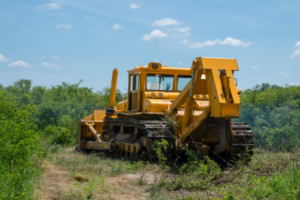
Forestry mulchers do the heavy lifting. A machine — often a skid steer or tracked carrier — carries a powerful mulching head fitted with rotating teeth that cut and shred vegetation on contact. In one efficient operation, the mulching head clears small trees, shrubs, and dense underbrush that traditional clearing methods would take far longer to remove.
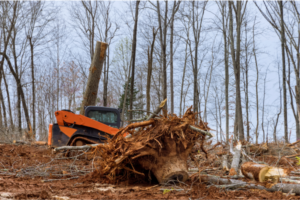
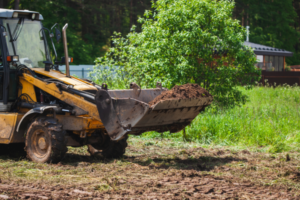
Because this mulching equipment works in place, it avoids the soil disturbance, hauling, and heavy machinery footprint of traditional land clearing. The result is faster, cleaner clearing with far less impact on the land.
Why the Leftover Mulch Layer Matters for Fire Prevention
The mulching process leaves behind a layer of mulch made from the ground-up vegetation. That organic matter isn’t just leftover debris — it plays an active role in fire prevention and soil health. The mulch layer retains moisture, protects the soil, and breaks down slowly to enrich the ground.
Just as importantly, mulching eliminates the standing dead vegetation and dense brush that fuel wildfires, without the need for burning that traditional methods often require. Removing that fuel is where real fire prevention begins.
How Forestry Mulching Reduces Wildfire Risk
By targeting the exact material that feeds fires, forestry mulching directly lowers wildfire risk on a property. It works on two fronts: removing fuel and shaping the land to slow any fire that does start.
Removing the Fuel That Wildfires Depend On
Wildfires depend on a continuous supply of fuel, and forestry mulching cuts that supply dramatically. Grinding down underbrush and dead vegetation reduces the fuel load, so there’s simply less material to catch and carry flames.
Thinning out dense vegetation also breaks up the ladder of fuel that lets fire climb from grass to shrubs to trees. With the density of vegetation reduced, the land becomes far less susceptible to ignition and rapid fire spread.
Creating Defensible Space and Fire Breaks
Forestry mulching also helps create defensible space around homes, barns, and other structures. By clearing a buffer zone of mulched, low-fuel ground, property owners give firefighters room to work and give flames less opportunity to reach buildings.
Mulching can even create firebreaks — cleared strips that interrupt the spread of fires across a property. These buffers slow or stop advancing flames, adding another layer of protection during wildfire season.
The Broader Benefits of Forestry Mulching as an Approach to Land Management
Wildfire prevention is a major benefit, but it’s far from the only one. As an approach to land management, forestry mulching supports the long-term health of your property in several ways.
A Sustainable Land Management Choice That Helps Prevent Wildfires
The benefits of forestry mulching reach well beyond fire risk. The mulch layer protects the soil from erosion, locks in moisture, and adds organic matter that improves soil health over time. That protection against soil erosion is a real advantage on Central Florida’s sandy ground.
Forestry mulching is also environmentally friendly. It avoids the smoke of burning and encourages the growth of native plants by clearing out invasive overgrowth, which in turn supports wildlife habitat. As a sustainable land management practice, it helps prevent wildfires while leaving the land healthier than traditional clearing methods do. For owners preparing land for development, it clears vegetation efficiently while preserving the soil beneath.
Planning Forestry Mulching Services for Your Marion County Property
If your property carries heavy brush or overgrown acreage, planning forestry mulching services before the next dry season is a smart, proactive step. Start by assessing where dense vegetation sits closest to structures, property lines, and access routes — those areas often benefit most from a cleared buffer.
From there, working with an experienced local team ensures the job matches your land’s specific conditions and goals. Professionals bring the right forestry mulchers and mulching equipment to handle everything from light underbrush to small trees, and they understand Central Florida’s fire risk firsthand. To learn more about forestry mulching and land management for your property, visit Land Clearing Ocala FL.
With the right land management practices in place, you can reduce wildfire risk, protect your soil, and enjoy a safer, healthier property for years to come.